On-Page SEO in 2026: What's Changed
Google's algorithm has evolved significantly. E-E-A-T (Experience, Expertise, Authoritativeness, Trustworthiness) now plays a central role, and AI-generated content is everywhere — which means genuine depth and originality stand out more than ever.
Title Tags
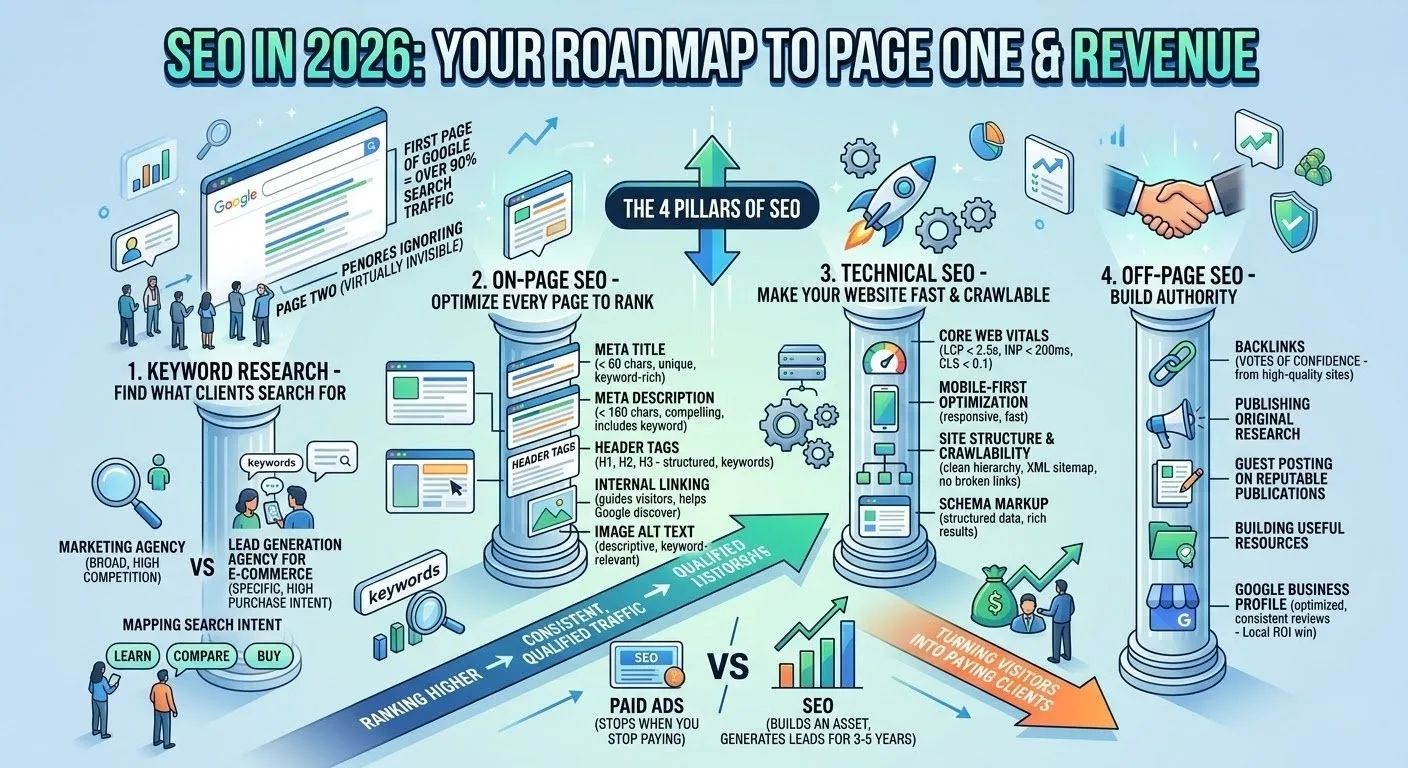
Keep titles under 60 characters, put your primary keyword near the start, and make them click-worthy. Avoid keyword stuffing — Google will rewrite your title if it looks manipulative.
Meta Descriptions
While not a direct ranking factor, a compelling meta description dramatically improves click-through rate. Treat it like ad copy: highlight the benefit and include a soft CTA.
Header Hierarchy
Use one H1 per page (matching your title intent), and structure content with H2s for main sections and H3s for sub-points. This helps both readers and crawlers understand your content.
Core Web Vitals
LCP (Largest Contentful Paint), CLS (Cumulative Layout Shift), and INP (Interaction to Next Paint) are confirmed ranking signals. Compress images, eliminate render-blocking scripts, and use a CDN.
Internal Linking
Link related posts together with descriptive anchor text. Good internal linking distributes PageRank, keeps visitors on site longer, and helps Google understand your site's topic clusters.
Schema Markup
Adding structured data (Article, FAQ, HowTo, LocalBusiness) can earn rich results in SERPs and meaningfully improve click-through rates — often with no movement in actual rankings.